Snatch Strap – Nylon 100T x 20M, 4 Ply 250mm | Austlift 204599
Product Description
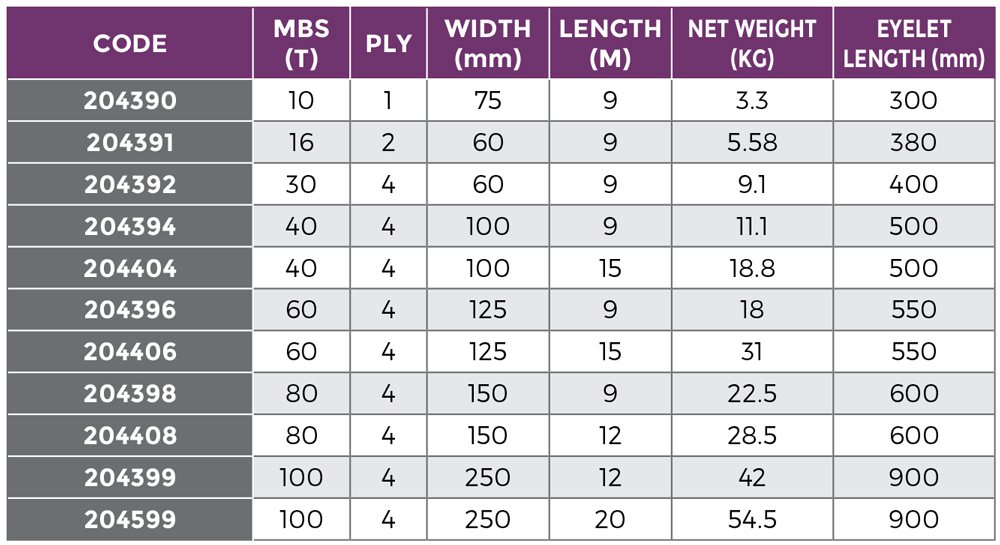
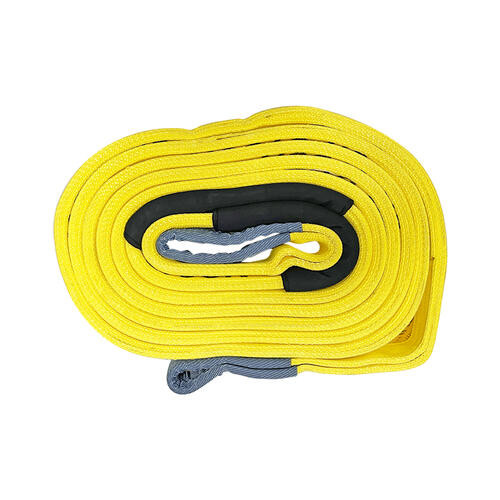
The Austlift 100T x 20M Snatch Strap is a heavy-duty kinetic recovery strap designed for large vehicles, mining equipment, earthmoving machinery and heavy mobile plant.
Manufactured from 100% high-strength nylon webbing, the strap is designed to provide a minimum stretch of 20%, allowing it to absorb and transfer kinetic energy during vehicle recovery. This controlled elasticity makes snatch straps particularly effective when recovering bogged or immobilised vehicles and equipment.
Featuring a substantial 4-ply, 250mm wide construction, this model is built for demanding high-capacity recovery applications. The 20 metre length provides excellent separation between recovery vehicles and equipment, making it particularly suitable for large-scale mining, civil, agricultural and heavy transport operations.
The strap features reinforced eyes for additional abrasion protection, helping protect high-wear connection areas during use. It is also UV resistant for outdoor applications and supplied with a safety information tag for identification and correct use.
Key Features & Specifications:
- Capacity: 100 tonnes
- Length: 20 metres
- Width: 250mm
- Construction: 4 Ply
- Material: 100% nylon webbing
- Minimum stretch: 20%
- Designed for kinetic vehicle recovery
- Reinforced eyes for additional abrasion protection
- UV resistant for outdoor use
- Supplied with safety information tag
- Heavy-duty construction for large equipment recovery
- Suitable for mining, earthmoving and heavy mobile plant
- Suitable for agricultural and heavy transport recovery
- Austlift Product Code: 204599
IMPORTANT – RECOVERY USE
Snatch straps store significant energy as they stretch during a recovery. Always use appropriately rated recovery points and compatible recovery equipment. Never attach a snatch strap to a tow ball or an unrated recovery point. Inspect the strap before use and remove it from service if cuts, excessive abrasion, damaged stitching or other deterioration is identified.